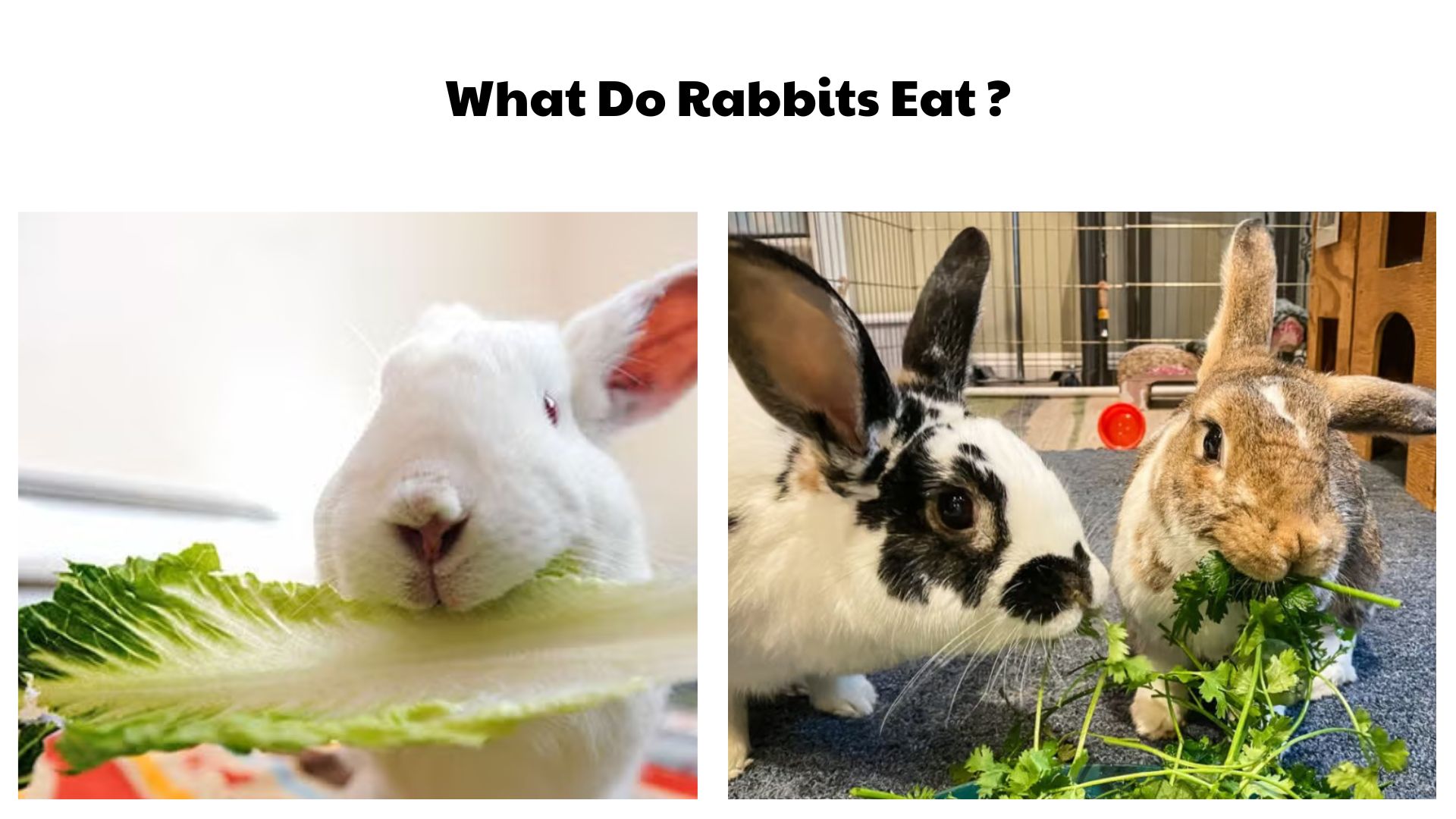
Rabbits are small herbivorous mammals belonging to the family Leporidae, and their survival in the wild depends entirely on plant-based food sources. Unlike omnivores or carnivores, rabbits have a digestive system specifically adapted to process large amounts of fiber throughout the day. Their diet is not just about nourishment—it is essential for keeping their teeth worn down, maintaining gut movement, and preventing serious digestive diseases.
In natural environments such as grasslands, forests, and meadows, rabbits spend most of their active hours grazing on grasses, leafy weeds, herbs, bark, and seasonal vegetation. This constant feeding behavior is critical because their digestive system is designed for continuous intake rather than large meals. Fiber plays the most important role, supporting a process called hindgut fermentation, which allows rabbits to extract nutrients efficiently from plant material.
For domestic rabbits, diet becomes one of the most important factors affecting long-term health and lifespan. Many health problems in pet rabbits—such as gastrointestinal stasis, obesity, and dental overgrowth—are directly linked to improper feeding. That is why understanding what rabbits naturally eat is essential for responsible care.
A proper rabbit diet is built around three core elements: unlimited grass hay, fresh leafy greens, and a limited amount of vegetables or treats. Fruits and starchy foods should be given sparingly, as rabbits are highly sensitive to sugar and carbohydrates. Even small dietary imbalances can lead to digestive disruption.
This guide explores 30 safe and natural foods that rabbits can eat, carefully selected based on their wild diet and modern veterinary nutrition guidelines. Each food reflects something rabbits would naturally encounter while foraging or can safely enjoy in captivity when offered correctly.
From leafy greens and herbs to vegetables and wild plants, these foods help replicate the variety and nutritional balance rabbits would experience in nature. Understanding these options not only improves diet quality but also encourages natural behaviors like chewing, grazing, and selective feeding.
What Do Rabbits Eat in the Wild? Leafy Greens and Foraged Vegetation

In the wild, rabbits are constant grazers. They move through meadows, grasslands, and woodland edges searching for tender leaves, grasses, and soft plant shoots. These foods form the foundation of their diet and provide the fiber needed to keep their digestive system functioning properly.
Leafy greens are especially important because they closely resemble what rabbits naturally consume every day. They are rich in moisture, fiber, and micronutrients while remaining low in sugar and fat—exactly what a rabbit’s body is designed to process.
1. Romaine Lettuce
Romaine lettuce is one of the safest and most widely recommended leafy greens for rabbits. In natural environments, rabbits often consume similar soft-leaf plants while grazing. Romaine provides hydration and fiber while being gentle on the digestive system.
It contains vitamins A and K, which support vision and blood health. Unlike iceberg lettuce, which offers very little nutrition and may cause digestive issues, romaine is nutrient-rich and safe when fed daily in moderate amounts as part of a varied diet.
2. Kale
Kale is a nutrient-dense leafy green that provides calcium, vitamin C, and antioxidants. In the wild, rabbits consume a wide variety of leafy weeds that resemble kale in texture and nutritional profile.
Although kale is healthy, it should be fed in moderation because it is high in calcium. Excess calcium can contribute to urinary issues in rabbits, so balancing kale with other greens is important.
3. Spinach
Spinach is rich in iron, vitamins, and fiber, making it a beneficial but limited addition to a rabbit’s diet. In natural foraging behavior, rabbits would occasionally consume similar wild greens.
However, spinach contains oxalates, which can interfere with calcium absorption. Because of this, it should be rotated with other leafy greens rather than fed daily.
4. Cabbage
Cabbage is a leafy vegetable that provides fiber and vitamins while supporting digestive health. In the wild, rabbits often consume cruciferous plants and wild cabbage-like vegetation when available.
It should be introduced slowly, as cabbage can sometimes cause gas if overfed. Small portions are ideal for maintaining digestive balance while offering variety.
5. Celery
Celery is a crunchy vegetable that helps promote hydration and chewing activity. In natural environments, rabbits consume fibrous stems and stalks similar to celery.
It is low in calories and safe in moderation. The fibrous texture also supports dental wear, which is essential for rabbit health because their teeth grow continuously.
6. Cucumber
Cucumber is a water-rich vegetable that helps keep rabbits hydrated, especially in warm conditions. While not a staple wild food, it mimics the moisture content of fresh vegetation rabbits encounter in nature.
It is very low in calories and sugar, making it safe in small amounts. However, overfeeding can cause soft stools due to its high water content.
7. Carrot Tops
Carrot tops are far healthier for rabbits than the carrot root itself. In the wild, rabbits frequently consume leafy plant tops and greens, which are rich in fiber and nutrients.
Carrot tops provide vitamin K and calcium while supporting natural grazing behavior. They can be fed more regularly than carrots themselves.
8. Parsley
Parsley is an aromatic herb that is highly nutritious and commonly found in rabbit-safe diets. In natural settings, rabbits consume a variety of herbs and wild plants with similar nutrient profiles.
It is rich in vitamins A, C, and K but should be fed in moderation due to its calcium content. Its strong aroma also makes it appealing to rabbits.
9. Coriander (Cilantro)
Coriander is a leafy herb that rabbits often enjoy due to its fresh scent and soft texture. In the wild, rabbits consume aromatic herbs and greens that provide both nutrition and hydration.
It is gentle on digestion and can be included regularly in rotation with other leafy greens, supporting dietary variety and enrichment.
10. Basil
Basil is a fragrant herb that provides antioxidants and trace nutrients. Wild rabbits often consume similar aromatic plants while foraging in herb-rich environments.
It is safe and can be offered frequently in small amounts. Basil also helps stimulate appetite and encourages natural grazing behavior.
11. Dandelion Greens
Dandelion greens are one of the most naturally important foods in a rabbit’s diet. In wild environments, dandelions grow abundantly in fields, lawns, and disturbed soil areas, making them an easily accessible and highly preferred forage plant. Rabbits instinctively seek out dandelion leaves because they are nutrient-dense, highly palatable, and support digestive function.
Nutritionally, dandelion greens are rich in vitamins A, C, and K, along with calcium, iron, and antioxidants. These nutrients help support immune health, bone strength, and blood function. One of the key benefits of dandelion greens is their natural diuretic property, which may assist in kidney and urinary health when fed in moderation.
From a behavioral perspective, rabbits show strong preference for dandelion greens due to their slightly bitter flavor, which mimics the variety of wild vegetation they would normally consume. This bitterness is not harmful—in fact, it often signals nutrient-rich plant material in nature.
However, despite their benefits, dandelion greens should still be fed as part of a balanced rotation. Overconsumption may contribute to excess calcium intake, which can affect urinary health in sensitive rabbits. Mixing them with lower-calcium greens helps maintain dietary balance.
In captivity, both fresh leaves and dried dandelion greens can be used as enrichment. They encourage natural foraging behavior, helping reduce boredom and support mental stimulation. Overall, dandelion greens are one of the closest dietary matches to a rabbit’s wild grazing habits and remain a valuable staple in controlled portions.
12. Plantain Leaves
Plantain leaves (from the Plantago species, not banana plantains) are a common wild forage food for rabbits and are widely found in grasslands, pathways, and meadows. In natural environments, rabbits frequently graze on these broad, low-growing leaves because they are tender, accessible, and nutritionally balanced.
Nutritionally, plantain leaves are rich in fiber, vitamins A and C, and beneficial plant compounds such as aucubin, which is known for its mild anti-inflammatory properties. These nutrients support digestive health, immune function, and general tissue repair. The high fiber content is especially important for rabbits, as it helps maintain healthy gut motility.
Behaviorally, rabbits often prefer plantain leaves due to their soft texture and mild taste. Unlike more bitter wild herbs, plantain offers a neutral flavor profile that allows rabbits to consume it in larger quantities during grazing sessions.
In the wild, plantain leaves are often part of mixed grazing patches, where rabbits move between different plant species in a single feeding session. This natural rotation helps prevent overconsumption of any one plant and supports nutritional diversity.
For domestic rabbits, plantain leaves can be safely included in daily greens rotation. They are gentle on the stomach and rarely cause digestive issues when introduced gradually. Both broadleaf and narrowleaf varieties are safe, provided they are free from pesticides and environmental contaminants.
One of the most valuable aspects of plantain leaves is their role in behavioral enrichment. Offering them in a scattered or forage-style feeding method encourages natural searching and grazing behavior, closely mimicking wild conditions. This supports both physical and psychological well-being in captive rabbits.
13. Clover
Clover is one of the most common wild forage plants consumed by rabbits across grasslands and rural environments. It grows abundantly in lawns, fields, and open spaces, making it a natural and easily accessible food source. Rabbits often graze on clover alongside grasses, especially during peak growth seasons when it is tender and nutrient-rich.
Nutritionally, clover provides fiber, protein, calcium, and a range of vitamins including A and C. The protein content is particularly valuable in wild conditions where rabbits must maintain energy levels while constantly moving and foraging. The fibrous structure of clover also supports healthy digestion and gut motility.
However, clover has a relatively higher calcium content compared to some other wild greens. While this is not an issue in small amounts, overfeeding in domestic rabbits may contribute to urinary tract concerns. Therefore, clover should always be part of a mixed-greens diet rather than a sole feeding item.
From a behavioral standpoint, rabbits are naturally attracted to clover due to its soft texture and slightly sweet flavor. In wild habitats, they often selectively graze younger clover leaves, which are more tender and easier to digest.
Clover also plays an important ecological role in rabbit feeding behavior. Because it grows in dense patches, rabbits can feed efficiently while staying alert to predators—a key survival adaptation. This grazing pattern helps explain why rabbits prefer clustered vegetation rather than isolated plants.
In domestic care, clover can be offered fresh and pesticide-free, ideally mixed with other leafy greens. It can also be used as part of enrichment feeding to encourage natural foraging behavior. When properly balanced, clover is a highly beneficial and natural component of a rabbit’s diet.
14. Chicory
Chicory is a wild-growing plant commonly found in grasslands, roadsides, and open fields, and it is a well-recognized forage food for wild rabbits. It produces slightly bitter leaves that rabbits willingly consume, especially when young and tender. This bitterness is actually a sign of beneficial plant compounds rather than an indication of poor palatability.
Nutritionally, chicory is rich in fiber, inulin (a natural prebiotic), and vitamins A and K. The high fiber content supports gut motility, which is essential for rabbits since their digestive system relies on continuous fiber intake. Inulin is particularly valuable because it helps support beneficial gut bacteria, which play a central role in rabbit digestion.
In wild environments, chicory is often part of mixed grazing areas where rabbits move between grasses, herbs, and flowering plants. This natural rotation helps prevent overconsumption of any single plant and ensures a balanced intake of nutrients.
Behaviorally, rabbits may selectively eat younger chicory leaves first because they are softer and easier to digest. Older leaves are still consumed but usually in smaller amounts. This selective feeding is a survival strategy that allows rabbits to maximize nutrient intake while minimizing digestive strain.
In domestic feeding, chicory can be safely included as part of a leafy green rotation. It should be introduced gradually, especially for rabbits that are not used to bitter greens. When fed appropriately, chicory supports digestive health, encourages natural foraging behavior, and adds valuable variety to the diet.
15. Mint
Mint is a highly aromatic herb that grows naturally in damp environments such as riverbanks, gardens, and meadows. In the wild, rabbits may encounter and consume mint along with other mixed vegetation. Despite its strong scent, mint is generally well tolerated and often enjoyed by rabbits.
Nutritionally, mint contains vitamins A and C, antioxidants, and small amounts of essential oils that can support digestive comfort. These natural compounds may help stimulate appetite and improve the palatability of mixed greens. However, because of its strong aromatic oils, mint should be fed in moderation.
Wild rabbits tend to sample mint rather than consume it in large quantities, usually integrating it into a broader diet of grasses and herbs. This selective grazing ensures that no single plant dominates their nutritional intake.
Mint’s sensory properties also play an important behavioral role. The strong smell provides stimulation and variety, which can encourage foraging behavior in both wild and domestic rabbits. In captivity, mint can be used as enrichment by scattering small leaves within hay or mixed greens.
While safe, mint should not be overfed due to its concentrated oils, which can be too intense for sensitive digestive systems if consumed in large amounts. When used correctly, it is a valuable herb that enhances dietary diversity and enrichment.
16. Oregano
Oregano is a hardy herb that grows in warm, dry climates and is part of the natural forage environment for rabbits in some regions. Its small leaves and strong aroma make it a distinctive plant that rabbits may nibble on when available among mixed vegetation.
Nutritionally, oregano contains antioxidants, fiber, and beneficial plant compounds such as carvacrol and thymol. These compounds have natural antimicrobial properties, which may support gut health when consumed in small amounts. However, due to its potency, oregano is best considered a supplementary herb rather than a dietary staple.
In the wild, rabbits consume oregano selectively, often mixing it with softer greens to balance its strong flavor. This reflects their instinctive ability to regulate intake based on plant strength and digestibility.
From a behavioral perspective, oregano adds complexity to a rabbit’s diet. Its aromatic profile can stimulate curiosity and encourage exploration of food sources, which is an important part of natural foraging behavior.
In domestic care, oregano should be introduced slowly and offered in small portions. It works best as part of a mixed herb selection rather than a standalone food item. When used properly, oregano contributes variety and mild digestive support.
17. Thyme
Thyme is another aromatic herb that rabbits may encounter in Mediterranean-type environments or cultivated gardens. It is a small-leaf plant with a strong scent and a slightly woody flavor, which makes it less commonly consumed in large amounts in the wild.
Nutritionally, thyme contains fiber, vitamin C, and essential oils with antioxidant properties. These compounds may support immune health and digestion when consumed in moderation. However, because of its concentrated oils, thyme should always be fed sparingly.
Wild rabbits typically sample thyme rather than rely on it as a primary food source. It is usually part of a mixed grazing area, where rabbits move between grasses, herbs, and leafy plants to balance their intake.
Thyme also plays a role in environmental enrichment. Its strong scent provides sensory stimulation, which can encourage exploratory feeding behavior. This is especially useful in domestic rabbits that may otherwise have a limited variety of natural stimuli.
When offered in captivity, thyme should be fresh, pesticide-free, and given in small amounts alongside other leafy greens. It is not a staple food but can enhance dietary diversity when rotated properly.
18. Rosemary
Rosemary is a woody, aromatic herb that grows in dry, rocky soils and coastal regions. While not a primary forage plant for rabbits, it may still be encountered in wild environments and occasionally sampled during grazing.
Nutritionally, rosemary contains antioxidants, fiber, and essential oils such as rosmarinic acid. These compounds may provide mild anti-inflammatory and digestive support when consumed in small quantities. However, due to its strong oil content, rosemary is not a herb rabbits consume frequently.
In natural behavior, rabbits may nibble on rosemary lightly while focusing primarily on softer vegetation. Its tough texture and strong aroma make it less appealing for continuous feeding.
Despite this, rosemary can still play a role in enrichment feeding. Its scent and structure can stimulate curiosity and encourage natural exploration of food items in captive environments.
When offered to pet rabbits, rosemary should be used sparingly and combined with other milder greens. It is best viewed as a supplemental herb rather than a dietary staple.
19. Watercress
Watercress is a semi-aquatic plant commonly found near streams, ponds, and wetland areas. In wild environments, rabbits may graze on watercress when foraging near moist habitats. It is tender, highly nutritious, and easy to digest.
Nutritionally, watercress is rich in vitamins A, C, and K, along with calcium, iron, and antioxidants. These nutrients support immune function, bone health, and overall vitality. Its high water content also contributes to hydration.
Wild rabbits often consume watercress as part of a mixed diet, especially in spring and summer when it is abundant. It is typically eaten alongside grasses and other leafy plants rather than as a sole food source.
In domestic feeding, watercress is considered one of the safer leafy greens and can be included regularly in rotation. It provides strong nutritional value and is well accepted by most rabbits.
Because of its slightly peppery flavor, it may be introduced gradually, but it is generally well tolerated when fresh and clean.
20. Radish Tops
Radish tops are the leafy green parts of the radish plant and are significantly more nutritious for rabbits than the root itself. In wild or garden environments, rabbits often consume leafy plant tops as part of their natural grazing behavior.
Nutritionally, radish tops provide fiber, vitamin C, calcium, and antioxidants. They support digestive health and contribute to bone maintenance when balanced properly within the diet.
Wild rabbits are naturally drawn to tender leafy growth, and radish tops closely match the type of vegetation they prefer. They are soft, easy to chew, and highly digestible.
However, like many leafy greens, radish tops should be rotated with other vegetables to maintain dietary balance and prevent excessive intake of specific nutrients such as calcium.
In captivity, they serve as an excellent enrichment food and can be offered regularly as part of a varied leafy green rotation.
21. Carrots
Carrots are one of the most recognized rabbit foods, but in reality, they are not a primary wild staple. Wild rabbits tend to consume carrot tops more often than the root itself. However, the carrot root is occasionally accessible in agricultural areas and can be eaten when available.
Nutritionally, carrots contain beta-carotene (vitamin A precursor), fiber, and natural sugars. These nutrients support vision, immune function, and energy metabolism. However, the sugar content is relatively high compared to leafy greens, which means carrots should be treated as a limited food rather than a daily staple.
From a behavioral perspective, rabbits enjoy carrots because of their sweet taste and crunchy texture. This makes them useful as occasional enrichment or training treats, but not as a primary dietary component.
Overfeeding carrots can lead to digestive imbalance and weight gain, so moderation is essential. In a balanced rabbit diet, leafy greens are far more important than root vegetables.
22. Bell Peppers
Bell peppers are colorful vegetables that rabbits may encounter in gardens or cultivated environments. While not a wild staple, they are safe and often well accepted due to their crisp texture and mild sweetness.
Nutritionally, bell peppers are rich in vitamin C, antioxidants, and fiber. These nutrients help support immune function and overall health. Unlike many other fruits and vegetables, bell peppers are relatively low in sugar, making them a safer occasional vegetable option.
Rabbits typically enjoy the crunchy texture of bell peppers, which also supports natural chewing behavior and dental wear. Both red, green, and yellow varieties are safe when served fresh and raw.
However, seeds and stems should be removed, and feeding should remain moderate as part of a varied vegetable rotation.
23. Broccoli Leaves
Broccoli leaves are highly nutritious and are actually more suitable for rabbits than the florets themselves. In natural foraging environments, rabbits consume a wide range of leafy plant structures similar to broccoli leaves.
Nutritionally, broccoli leaves provide fiber, vitamin C, calcium, and antioxidants. They support digestive health and contribute to overall nutrient diversity in the diet.
Because rabbits are adapted to eating fibrous leaves, broccoli leaves are generally well tolerated when introduced gradually. They should be fed in moderation due to their cruciferous nature, which may cause gas in sensitive rabbits if overfed.
In domestic feeding, broccoli leaves are an excellent leafy green option that mimics wild forage behavior and adds variety to daily greens.
24. Cauliflower Leaves
Cauliflower leaves are another vegetable often overlooked but highly valuable for rabbit diets. In cultivated environments, rabbits naturally browse on leafy brassica plants, including cauliflower leaves.
Nutritionally, they contain fiber, vitamins, and plant compounds that support digestion and immune health. Like other cruciferous vegetables, they must be fed in moderation to avoid digestive gas.
Rabbits typically prefer the softer, younger leaves, which are easier to chew and digest. These leaves are best served fresh and rotated with other greens for balance.
25. Zucchini
Zucchini is a soft, water-rich vegetable that is easy for rabbits to digest. While not a wild food, it closely resembles the tender plant matter rabbits would naturally encounter in the wild.
Nutritionally, zucchini is low in calories and sugar but provides hydration and small amounts of fiber and vitamins. This makes it a safe addition to a rabbit’s vegetable rotation.
Rabbits generally enjoy its mild flavor and soft texture, and it can be fed more regularly than higher-sugar vegetables. However, portion control is still important to avoid digestive imbalance from excessive water intake.
26. Pumpkin
Pumpkin is a seasonal vegetable that rabbits may encounter in agricultural areas. While not a core wild food, it is safe and provides nutritional variety in domestic diets.
Nutritionally, pumpkin contains fiber, beta-carotene, and antioxidants. It supports digestive health and can be especially helpful in small amounts for mild digestive support due to its fiber content.
Because pumpkin is starchy compared to leafy greens, it should be fed in moderation. Both raw and cooked plain pumpkin (without seasoning) can be offered in small portions.
27. Turnip Greens
Turnip greens are leafy tops of the turnip plant and are far more suitable for rabbits than the root itself. In wild or farm-edge environments, rabbits often graze on leafy plant tops similar to turnip greens.
Nutritionally, they provide fiber, calcium, and vitamins A and K. These nutrients support bone health and digestion when properly balanced in the diet.
Turnip greens should be introduced gradually, as they belong to the cruciferous family and may cause gas in sensitive rabbits if overfed. When rotated properly, they are a nutritious leafy green option.
28. Parsnip
Parsnip is a root vegetable that rabbits may encounter in cultivated areas. While not a wild staple, it can be safely consumed in moderation as part of a varied diet.
Nutritionally, parsnips contain fiber, vitamin C, and natural carbohydrates. However, they are higher in sugar and starch compared to leafy greens, making them suitable only as occasional treats.
Rabbits tend to enjoy the sweet flavor of parsnips, but overfeeding can lead to weight gain and digestive imbalance, so portion control is essential.
29. Pea Pods
Pea pods are a crunchy vegetable that rabbits may encounter in garden environments. They are generally safe and often well accepted due to their texture and mild sweetness.
Nutritionally, pea pods provide fiber, vitamins, and small amounts of plant protein. They support digestion and contribute to dietary variety.
Rabbits enjoy chewing pea pods, which also supports natural dental wear. However, because peas contain more starch than leafy greens, they should be fed in moderation.
30. Beet Greens
Beet greens are the leafy tops of the beet plant and are significantly more suitable for rabbits than the root itself. In natural foraging behavior, rabbits often consume leafy plant tops similar to beet greens.
Nutritionally, beet greens are rich in fiber, vitamins A and K, and minerals like iron and magnesium. These nutrients support blood health, digestion, and overall vitality.
They are generally safe when fed as part of a balanced leafy green rotation. However, because they contain moderate calcium levels, they should not be the sole green in the diet.
Conclusion: What Do Rabbits Eat and How Should They Be Fed?
Rabbits are strict herbivores with a digestive system built for constant grazing on fibrous plant material. Their natural diet is dominated by grasses, leafy greens, herbs, and seasonal vegetation, with occasional access to vegetables and fruits in cultivated environments.
In domestic care, the foundation of a healthy rabbit diet must always be unlimited grass hay, supported by a daily rotation of fresh leafy greens. Vegetables and fruits should only be used as occasional supplements rather than dietary staples.
Proper nutrition is essential for preventing serious health issues in rabbits, including gastrointestinal stasis, obesity, and dental disease. Because their teeth grow continuously and their gut relies on constant fiber flow, even small dietary mistakes can have long-term consequences.
When fed correctly, rabbits display natural behaviors such as grazing, selective feeding, and foraging enrichment. These behaviors are not just instinctive—they are essential indicators of physical and psychological well-being.
50+ Frequently Asked Questions About What Rabbits Eat
1. What do rabbits eat in the wild?
Wild rabbits eat grasses, weeds, leafy plants, herbs, bark, and seasonal vegetation.
2. What is the main food for rabbits?
Grass hay is the most important and essential food in a rabbit’s diet.
3. Can rabbits eat vegetables every day?
Yes, leafy greens can be fed daily in rotation.
4. Can rabbits eat fruit?
Yes, but only in very small amounts due to sugar content.
5. Can rabbits eat carrots?
Yes, but carrots should be limited because they are high in sugar.
6. Can rabbits eat lettuce?
Yes, romaine lettuce is safe, but iceberg should be avoided.
7. Can rabbits eat cabbage?
Yes, but it should be fed in moderation due to gas risk.
8. Can rabbits eat spinach?
Yes, but only in small amounts due to oxalates.
9. Can rabbits eat kale?
Yes, but rotate it with other greens to balance calcium intake.
10. Can rabbits eat celery?
Yes, celery is safe and helps with hydration and chewing.
11. Do rabbits need hay?
Yes, hay is essential for digestion and dental health.
12. Can rabbits eat grass?
Yes, fresh grass is a natural and healthy food source.
13. Can rabbits eat dandelions?
Yes, dandelion greens are highly nutritious and safe.
14. Can rabbits eat herbs?
Yes, herbs like parsley and basil are safe in moderation.
15. Can rabbits eat parsley?
Yes, parsley is nutritious but should be rotated with other greens.
16. Can rabbits eat basil?
Yes, basil is safe and well tolerated.
17. Can rabbits eat cucumber?
Yes, cucumber is hydrating but should be limited.
18. Can rabbits eat bell peppers?
Yes, bell peppers are safe and low in sugar.
19. Can rabbits eat broccoli?
Yes, especially broccoli leaves in small amounts.
20. Can rabbits eat cauliflower?
Yes, but only in moderation due to gas risk.
21. Can rabbits eat pumpkin?
Yes, pumpkin is safe in small portions.
22. Can rabbits eat zucchini?
Yes, zucchini is safe and low in calories.
23. Can rabbits eat peas?
Yes, pea pods are safe in moderation.
24. Can rabbits eat beet greens?
Yes, beet greens are nutritious but should be rotated.
25. Can rabbits eat turnip greens?
Yes, but feed in moderation due to gas potential.
26. Can rabbits eat fruit daily?
No, fruit should only be an occasional treat.
27. What fruits are safe for rabbits?
Small amounts of apple, banana, and berries are safe.
28. Can rabbits eat apples?
Yes, but seeds must be removed.
29. Can rabbits eat bananas?
Yes, but only tiny amounts due to sugar.
30. Can rabbits eat strawberries?
Yes, strawberries are safe in moderation.
31. Can rabbits eat blueberries?
Yes, blueberries are safe as occasional treats.
32. Can rabbits eat bread?
No, bread is not recommended for rabbits.
33. Can rabbits eat rice?
No, rice is not part of a natural rabbit diet.
34. Can rabbits eat nuts?
No, nuts are too fatty and not suitable.
35. Can rabbits eat seeds?
No, seeds are not safe or natural for rabbits.
36. Can rabbits drink milk?
No, rabbits should not consume dairy.
37. Do rabbits need water?
Yes, fresh clean water must always be available.
38. Can rabbits eat meat?
No, rabbits are strict herbivores.
39. Can rabbits eat chocolate?
No, chocolate is toxic to rabbits.
40. Can rabbits eat onions or garlic?
No, these foods are toxic and dangerous.
41. Can rabbits overeat vegetables?
Yes, too many vegetables can cause digestive issues.
42. How often should rabbits eat greens?
Daily, with a variety of leafy greens rotated.
43. What is the best vegetable for rabbits?
Romaine lettuce is one of the safest daily greens.
44. Can rabbits eat fruit skins?
Some skins are safe if washed and pesticide-free.
45. Why is hay important for rabbits?
It supports digestion and prevents dental problems.
46. Can rabbits eat human food?
Only plain vegetables; processed foods must be avoided.
47. Do rabbits eat all day?
Yes, rabbits naturally graze continuously.
48. Can rabbits become obese?
Yes, poor diet and excess treats can cause obesity.
49. What foods are toxic to rabbits?
Chocolate, onions, garlic, and processed foods are toxic.
50. What is a healthy rabbit diet?
A diet based on hay, leafy greens, and limited vegetables is healthiest.